
The ABCs of Mental Health: 25 Common Terms Explained
The ABCs of Mental Health
October is an important month for mental health awareness. Congress and the National Alliance on Mental Illness (NAMI) recognize October 4–10, 2026 as Mental Illness Awareness Week, and October 10 is World Mental Health Day. Awareness days like these reduce stigma and help communities learn how to support one another.
At Low Country Behavioral Health, our therapists in Mount Pleasant and West Ashley aim to do the same. We recognize how confusing mental health and the overall system can feel at times. Today’s blog will focus on identifying common mental health terms. We want everyone to feel empowered when it comes to supporting their mental health.
ABCs Explained

A
Acceptance and Commitment Therapy (ACT): This is a newer evidenced-based form of psychotherapy. The focus is psychological flexibility, which involves various concepts. The basic tenets include present moment awareness, recognizing and accepting thought patterns, and identifying core values in order to guide behaviors. We have therapists at Low Country Behavioral Health who utilize ACT interventions!
Anxiety: Anxiety is a feeling we all experience. However, it can also be a mental health disorder. Generalized anxiety disorder (GAD) is categorized by excessive worry that is difficult to control coupled by physical symptoms. These might include things like restlessness, fatigue, muscle tension, concentration problems, irritability, and sleep disturbance.
Attention-Deficit/Hyperactivity Disorder: Most commonly referred to as ADHD, this mental health diagnosis involves elements of inattention, hyperactivity/impulsivity, and/or both. Inattention usually looks like difficulties holding attention, difficulties following through on instruction/tasks, difficulties organizing, easily distractible and forgetfulness. Hyperactivity and impulsivity can include fidgeting, interruptions, seeming “on the go” and excessive communication. As mentioned, both can be present. Everyone’s brain functions differently in unique ways, and ADHD can be one of those ways.
B
Bipolar Disorder: There are two forms of bipolar disorder, the difference being length and intensity of the mood shifts. They both involve a manic or hypomanic (less intense presentation) episode, which is usually demonstrated by high/irritable mood or energy shift, risky behavior, decreased need for sleep, grandiosity, and racing thoughts. Depressive periods are common in both.
C
Cognitive Behavioral Therapy (CBT): CBT is the most widely known form of evidence-based therapy. CBT focuses on the cognitive triangle, otherwise known as the unique interplay between our thoughts, emotions, and behaviors. For instance, if you wake up thinking “I can’t do this today,” we might begin feeling discouraged and choose to remain in bed. CBT helps you identify and change unhelpful thinking patterns. We have therapists at Low Country Behavioral Health who utilize CBT interventions.
Coping Skill: Strategies and tools that you can identify with your therapist that help you to tolerate distress and discomfort.
D
Depression: Often shorthand for Major Depressive Disorder (MDD). An MDD diagnosis entails experiencing symptoms such as the following: low mood, loss of interest/pleasure in activities, weight/appetite changes, sleep disturbances, fatigue, concentration problems, psychomotor changes, and feelings of worthlessness/guilt. It may also include suicidal ideations, which as defined within this post too.
Diagnostic and Statistical Manual of Mental Disorders (DSM-5-TR): The most recent manual that categorizes all the identified mental health disorders. This is usually the book out of which a therapist diagnoses your mental health concerns when it comes to insurance billing.
Dialectical Behavioral Therapy (DBT): Another form of evidence-based therapy derived from CBT. DBT is based on the premise that two opposing ideas can be true at one time, so for instance, “I can be really frustrated at my mom, and still love her deeply.” There are four skills areas within DBT: mindfulness, distress tolerance, emotional regulation, and interpersonal effectiveness. Within those categories are a variety of different skills that you and your therapist might work on. We have therapists at Low Country Behavioral Health who utilize DBT interventions.
E
Eating Disorders: Eating disorders, including anorexia nervosa, bulimia nervosa, binge eating disorder, and ARFID, are serious mental health conditions that affect people of every body size, age, gender, and background. You cannot tell whether someone is struggling by looking at them. At Low Country Behavioral Health, we take a weight-inclusive, Health at Every Size® aligned apporach to eating disorder treatment.
Eye Movement Desensitization and Reprocessing (EMDR): A form of evidence-based therapy for trauma. It involves using a stimulus to engage both sides of the brain. This helps to reprocess memories, often reducing the emotional distress associated with them. We have this form of therapy available at Low Country Behavioral Health.
I
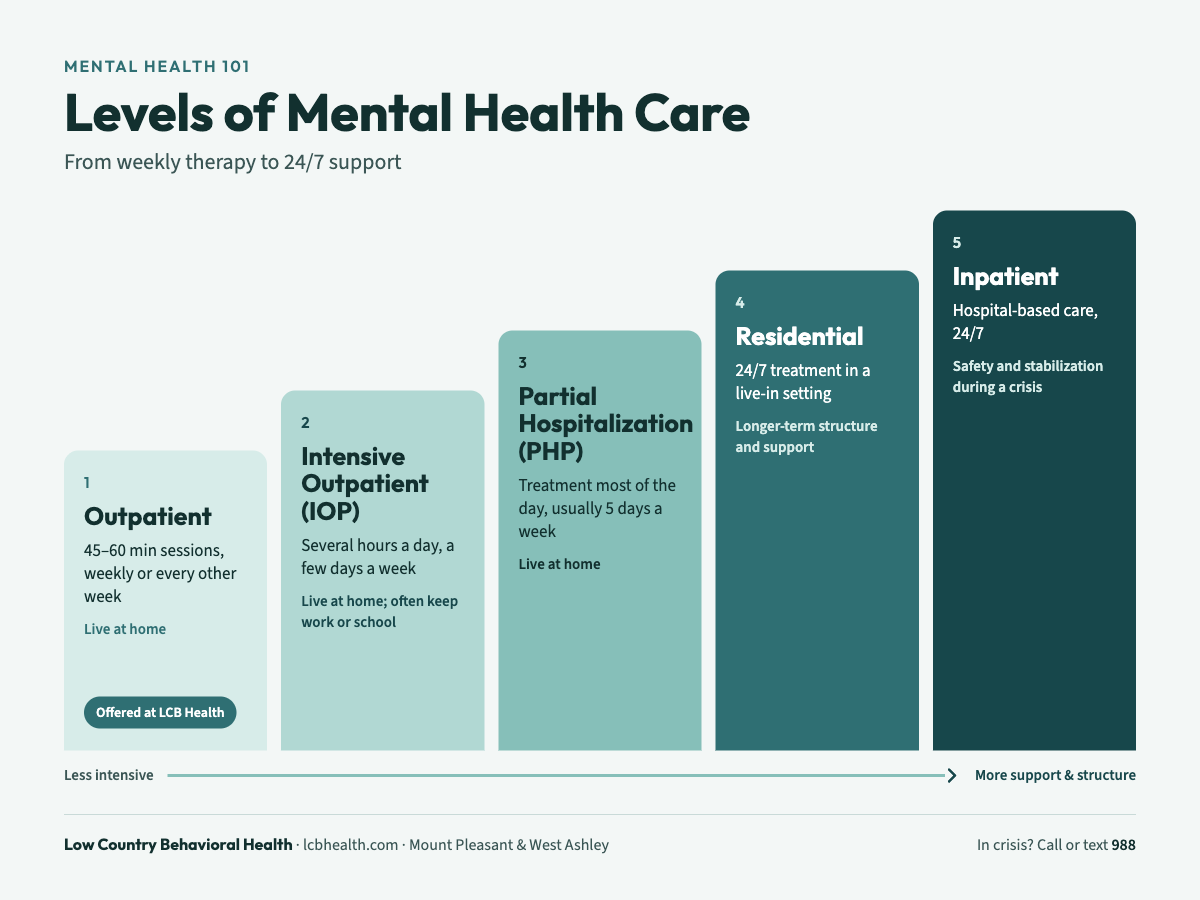
Inpatient Care: Can be in a hospital or residential facility. This is a form of care to support crisis situations and/or when someone might be a danger to themselves.
L
Licensed Clinical Social Workers: Individuals who often hold a master’s degree in social work. While they are able to provide therapy using evidence-based practices, they can also practice social work in a variety of other ways too. A social work education is more generalized, and incorporates various subject areas.
Licensed Marriage and Family Therapists (LMFT): Individuals who hold a master’s degree within this specific subject area. They are most specialized when it comes to understanding family systems, and relational (including couples) dynamics, and providing psychotherapy in this arena.
Licensed Professional Counselors (LPC): Individuals who hold a master’s degree in mental health counseling. Usually provide psychotherapy using evidence-based practices as their primary role.
M
Modality: This is a fancy term for the type of therapy that your therapist might practice, such as CBT, DBT, ACT, or EMDR. Feel free to stimulate a conversation with providers around the modalities they specialize in.
O
Obsessive-Compulsive Disorder: We find that this one can often be misunderstood. Obsessive-Compulsive Disorder (OCD) often involves obsessions, compulsions, or both. Obsessions are usually unwanted, recurrent, and often intrusive thoughts or images that cause intense distress. Compulsions are physical or mental acts that someone might feel compelled to perform in order to neutralize the distress. For example, you consistently turn right while driving because turning left evokes images of someone you love dying, which brings about lots of anxiety.
Outpatient Care: Talk therapy sessions that take place with a mental health professional. Usually about 45-50 minutes every week or every other week to manage mental health symptoms.
P
Post-Traumatic Stress Disorder (PTSD): Commonly known as PTSD, this disorder involves either directly experiencing or indirectly being exposed to some kind of trauma. Trauma can be categorized as catastrophic, life-threatening events, while also other distressing, painful events that may seem “smaller” in magnitude, yet have just as much of an impact. Usually, we see these experiences becoming intrusive to individuals. They might cause you to avoid reminders of the trauma, experience negative changes in thinking/mood, and/or alter physiological reactivity.
Psychiatrists: Individuals who usually hold medical degrees that are able to complete medical evaluations, assess for mental health concerns, and provide medication management. Typically, they are not providing talk therapy. Instead, they will be able to assess and manage symptoms utilizing medical intervention.

Psychologists: Individuals who usually hold doctoral degrees (PhD or PsyD). While they are able to provide talk therapy, their specialization is often assessment. They can provide psychological testing and evaluation for mental health concerns in a more extensive way than any other provider group.
Psychotherapy: A fancy term for talk therapy.
R
Residential Treatment: Usually a more long-term care opportunity of 24/7 treatment in a live-in setting.
S
Step-Down Care: Usually an intermediary option between inpatient and outpatient care. Can be a partial hospitalization program (PHP), where an individual lives at home but attends therapy services for the majority of the day. Or, this could look like an intensive outpatient (IOP), where individuals can be involved with work or school responsibilities and yet attend a few days a week.
Suicidal Ideations: Thoughts about ending one’s life due to feelings of hopelessness. Passive suicidal thoughts could include some desire to die, without thoughts of acting on it. Active suicidal ideation includes thoughts of kills oneself, which may or may not include a plan or intent. Both are serious and deserve support.
If you’re in crisis: Call or text 988 to reach the 988 Suicide & Crisis Lifeline, available 24/7 (988lifeline.org). If you're in immediate danger, call 911 or go to the nearest emergency room.
The List is Extensive…
In reality, the list of mental health terms is truly endless. This list is just a start, and ideally will help with some of the basics. Mental health affects everyone, therefore, it is something we all need to become educated about. Education equals empowerment.
At Low Country Behavioral Health, we take client empowerment seriously. Feel free to ask your therapist about topics you find yourself curious about. Or, if you’re considering beginning therapy, feel free to reach out and let us support you!
About the Author: Renee Neves, LMSW
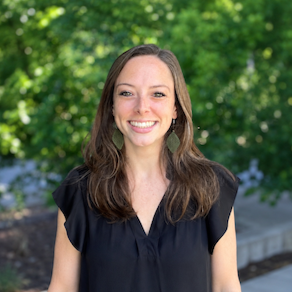
Renee Neves, LMSW, is a therapist at Low Country Behavioral Health, seeing clients at both our Mount Pleasant and West Ashley offices. Renee specailizes in working with children, teens, and adults navigating school/work stress, anxiety, life transitions, relationship concerns, and more. She uses approaches like CBT, DBT, and ACT to help clients build coping skills and feel more like themselves. Learn more about Renee or schedule a free consultation today.
Ready to take the next step?
You don’t need to know all the right words to start therapy. That’s what we’re here for. Our therapists in Mount Pleasant and West Ashley offer individual, couples, and family therapy for anxiety, depression, trauma, eating disorders, and more, in person and telehealth across South Carolina. Reach out today to schedule a free consultation.